
How to Choose a Metal Framing Contractor for a Commercial Project
· By Wellington Dos Santos
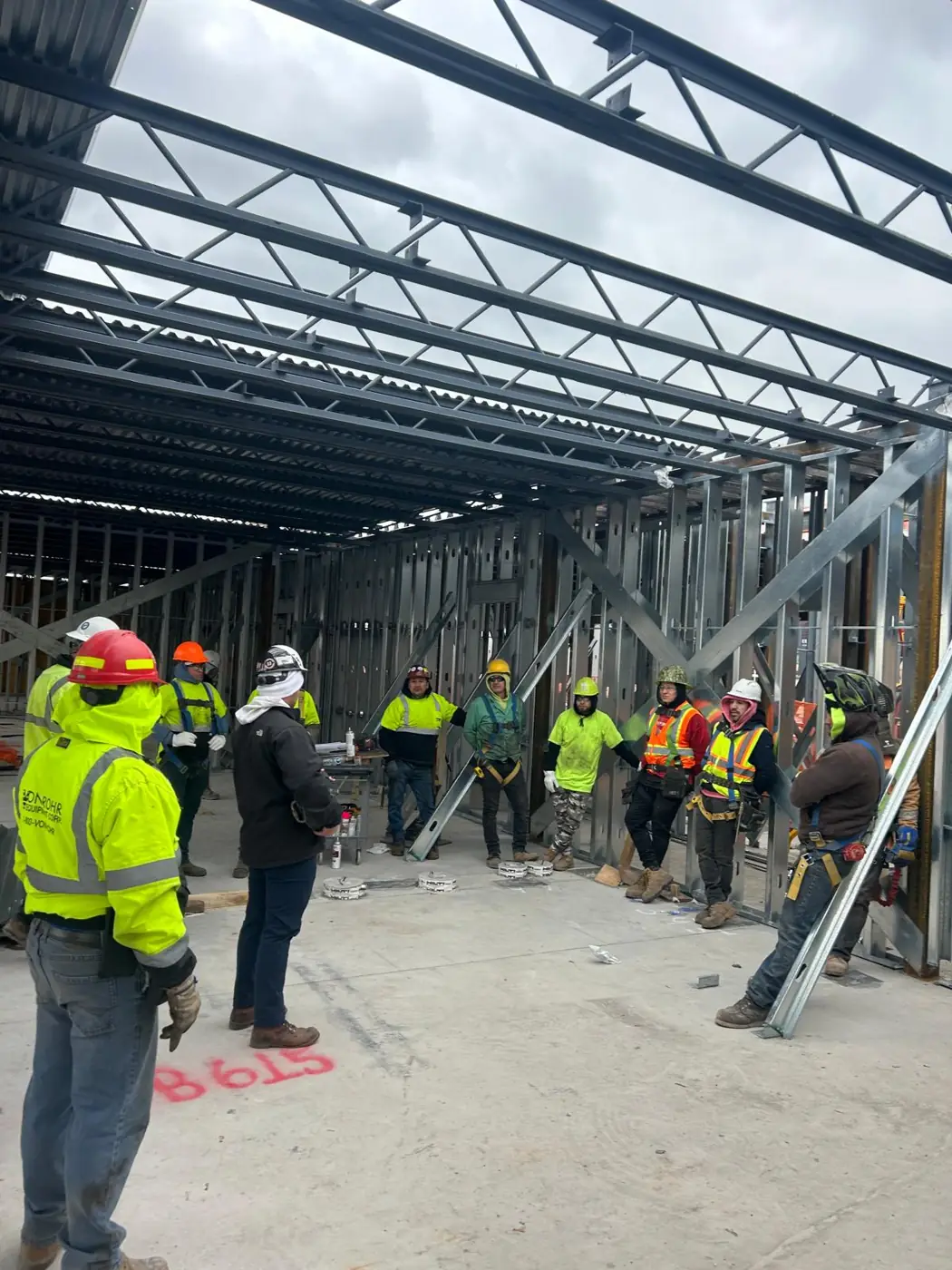
Framing is the trade that every interior trade waits on. When the metal framing contractor is on schedule, MEP rough-in, inspections, insulation, board and ceilings flow behind them. When framing falls behind or has to be redone, the whole building feels it. That is why choosing the right framing sub is one of the bigger decisions a GC makes on a commercial or multifamily job.
After 20+ years in commercial metal framing, we have seen what separates a framing package that runs smoothly from one that turns into a weekly argument. This checklist is written for GCs, developers and owners' reps who want to make that call with clear eyes.
Start with scope clarity
Most framing disputes start in the bid, not in the field. Before comparing numbers, make sure every bidder is pricing the same scope. Does the number include deflection track and head-of-wall details, backing and blocking, soffits, shaft walls, exterior framing, ceilings, door frame installation, and layout? Does it include hoisting, or is the GC providing it? Who handles cleanup and debris?
Ask each bidder for a written scope with clear inclusions and exclusions. A good framing contractor will tell you up front what is in, what is out and what assumptions they made. A vague scope letter that says framing per plans is not a scope.
Pay attention to qualifications on gauges and wall types. If one bidder is carrying the specified studs and another assumed lighter material, the numbers are not comparable, and the gap will come back later as a change order or a failed inspection.
Manpower and capacity
Ask how many framers the contractor can put on your job at the peak, and who those people are. Is the foreman who will run the job someone who has done buildings like yours? Will the crew be steady, or will it change week to week depending on what else is going on?
Then ask what happens when the job opens up faster than planned. If two floors become available at once, can they add people, or will one floor sit? A contractor who is honest about capacity is more valuable than one who promises everything and shows up short.
Look at current workload. A framer stretched across too many jobs will move crews around to put out fires, and your project will be the one that loses people on a bad week.
Schedule discipline and layout accuracy
Ask how the framer plans their work against your schedule. Do they build a sequence by floor and area? Do they know what they need from you (approved submittals, material deliveries, hoist time, clear floors) and when they need it? Good subs tell you about a problem two weeks before it hits, not on the day.
Layout is the other half. Walls that are off by an inch create problems for doors, casework, tile and ceilings all the way through the building. Ask who does layout, what tools they use, how they work from control lines, and how they check their work before track goes down. A framer who takes layout seriously will be happy to explain it.
On our jobs, staying on schedule is the thing we are measured on, and it starts with layout that is right the first time and a clear list of what we need from the GC to keep moving.
Communication, safety and documents
You will be talking to the framing foreman almost every day. Ask who your point of contact is, how quickly they answer, and how they handle RFIs and conflicts in the drawings. A framer who sends a clear RFI with a photo and a proposed fix saves the project manager hours.
Safety culture shows up in small things: housekeeping on the floor, how material is stored, fall protection at slab edges, how the crew handles lifts and ladders, and whether they follow the site safety plan without being chased. Ask about their approach and watch how their crew works if you can visit a current job.
On paperwork, ask any sub for proof of insurance and any documents your project requires, such as certificates, safety plans, training records or prequalification forms. Collect them before mobilization, not after the first week on site.
References that actually tell you something
References are only useful if you ask the right questions. Instead of asking whether the GC was happy, ask: did the framer hold their schedule, how did they handle changes, did they have enough people at the peak, how was layout accuracy, and would you hire them again on a similar building?
Ask for references on similar work. A crew that does great tenant fit-outs may not be set up for a seven-story panelized building, and the reverse is also true. Building type, height and site conditions should match what you are building.
If possible, walk a project they are working on now. Straight walls, clean floors and organized material tell you more than any brochure.
How to compare framing bids
Level the bids before you compare them. Put each scope side by side, line by line, and add the cost of anything one bidder excluded that another included. Hoisting, layout, backing, soffits and ceilings are common places for gaps. After leveling, the spread between bids often narrows or flips.
Then weigh the number against the risk. A framing package that is slightly cheaper but slips two weeks can cost more in general conditions and trade stacking than the savings. The cheapest number is only the cheapest outcome if the framer delivers on schedule and builds it right.
If you are leveling framing bids on a commercial or multifamily project anywhere from Jersey City and Hoboken to Brooklyn and the Bronx, we would be glad to price it. Send us your drawings for a bid or call (973) 392-4979.
Frequently asked questions
- What should a metal framing bid include?
- A clear framing bid lists inclusions and exclusions: wall types and gauges carried, deflection track and head-of-wall details, backing and blocking, soffits and ceilings, shaft walls, exterior framing, layout, hoisting and material handling, cleanup and any assumptions about schedule or access. It should state what the framer needs from the GC. If a bid only says framing per plans, ask for a detailed scope before comparing it.
- Why do framing bids on the same project vary so much?
- Usually because bidders priced different scopes or assumptions. One may have excluded hoisting, layout or soffits, carried lighter gauges, or assumed a faster schedule or more access. Others price risk differently based on site conditions. Leveling bids line by line, and adding missing items to each, usually explains most of the difference and shows which number really costs less. It is also fair to ask each bidder to clarify their assumptions in writing before award.
- How early should a GC bring in the framing contractor?
- As early as practical, ideally during preconstruction or early bidding. A framer can flag constructability issues, wall type conflicts, deflection details, backing requirements and sequencing problems before they become change orders. For structural framing or delegated design, early involvement also gives time for engineering and shop drawings, which are often on the critical path for material orders. It also helps the framer plan manpower for your dates.
Found this helpful? Make us a preferred source on Google.
Pricing a steel or framing package?
Send the drawings and your schedule. Free estimates for exactly what is in our scope of work.